
Heating the Broth
Heating the Broth

Cold streets warm the soul when you step through that door. Deep amber broth steaming in handmade ceramic, neon light bleeding through fogged glass, the sound of water droplets on the window—this is where the night finds warmth.
A narrow counter under amber light, rain streaking the window, neon kanji glowing pink and cyan. The feeling of stepping from cold darkness into warmth.
Eighteen-hour broths simmered from bone and patience. Every noodle pulled by hand. Every topping selected with intention. This isn't fast—it's honest.
You come alone, or with someone close. You sit at the counter. Steam rises. Outside, the city rushes past. Here, time slows. This is your moment of stillness.



'%2F%3E%3Cstop%20offset%3D'1'%20stop-color%3D'hsl(179%2C36%25%2C12%25)'%2F%3E%3C%2FlinearGradient%3E%3C%2Fdefs%3E%3Crect%20width%3D'800'%20height%3D'600'%20fill%3D'url(%23g)'%2F%3E%3C%2Fsvg%3E)
'%2F%3E%3Cstop%20offset%3D'1'%20stop-color%3D'hsl(85%2C36%25%2C12%25)'%2F%3E%3C%2FlinearGradient%3E%3C%2Fdefs%3E%3Crect%20width%3D'800'%20height%3D'600'%20fill%3D'url(%23g)'%2F%3E%3C%2Fsvg%3E)

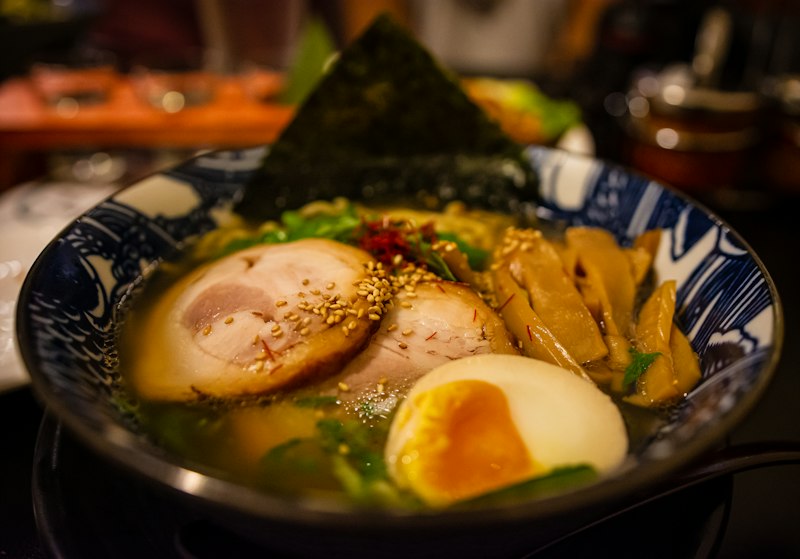
The moment before the first spoonful—steam rising off the surface, light catching the broth's golden sheen.

The counter where solitude and warmth meet—amber pendants casting pools of gold, the outside world a blur of neon and rain.

11 PM on a wet night—the city is cold and empty, but your destination glows warm and inviting.
Tonkotsu begins with bones—pig bones, roasted until they're white and gleaming. They go into the pot with water at 4 AM. The broth simmers for eighteen hours, the heat turned up high enough that the water becomes a rolling boil, breaking down collagen into gelatin, fat into emulsion, minerals into essence.
By 10 PM, when you arrive, that broth has become something transcendent—creamy as silk, deep as memory, warm as coming home. Every bowl carries those eighteen hours inside it.

"I found myself at the counter on a rainy Tuesday at 11 PM, soaked through, cold to the bone. One bowl of tonkotsu later, I understood why people come back night after night."

"The steam, the light, the way the broth tastes—it's like every element of this place is designed to make you feel exactly what you need to feel in that moment."

"After 18 hours of simmering, that broth doesn't just taste good. It tastes earned. It tastes like someone cares, really cares, about whether you have a good night."

A table is waiting. The broth is heating. Step out of the rain and into warmth.